
What’s Trending in Different Markets?
Furniture trends are no longer shaped by a single global direction. While certain aesthetics continue to influence international design, different regions are developing their own preferences based on lifestyle, spatial needs, culture, and the way people use their homes.
For manufacturers and global furniture brands, understanding these regional differences has become increasingly important. From comfort preferences to material choices and sofa proportions, today’s market trends reveal how design continues to adapt across continents.
Here is a glimpse into what is shaping furniture collections across different markets today.
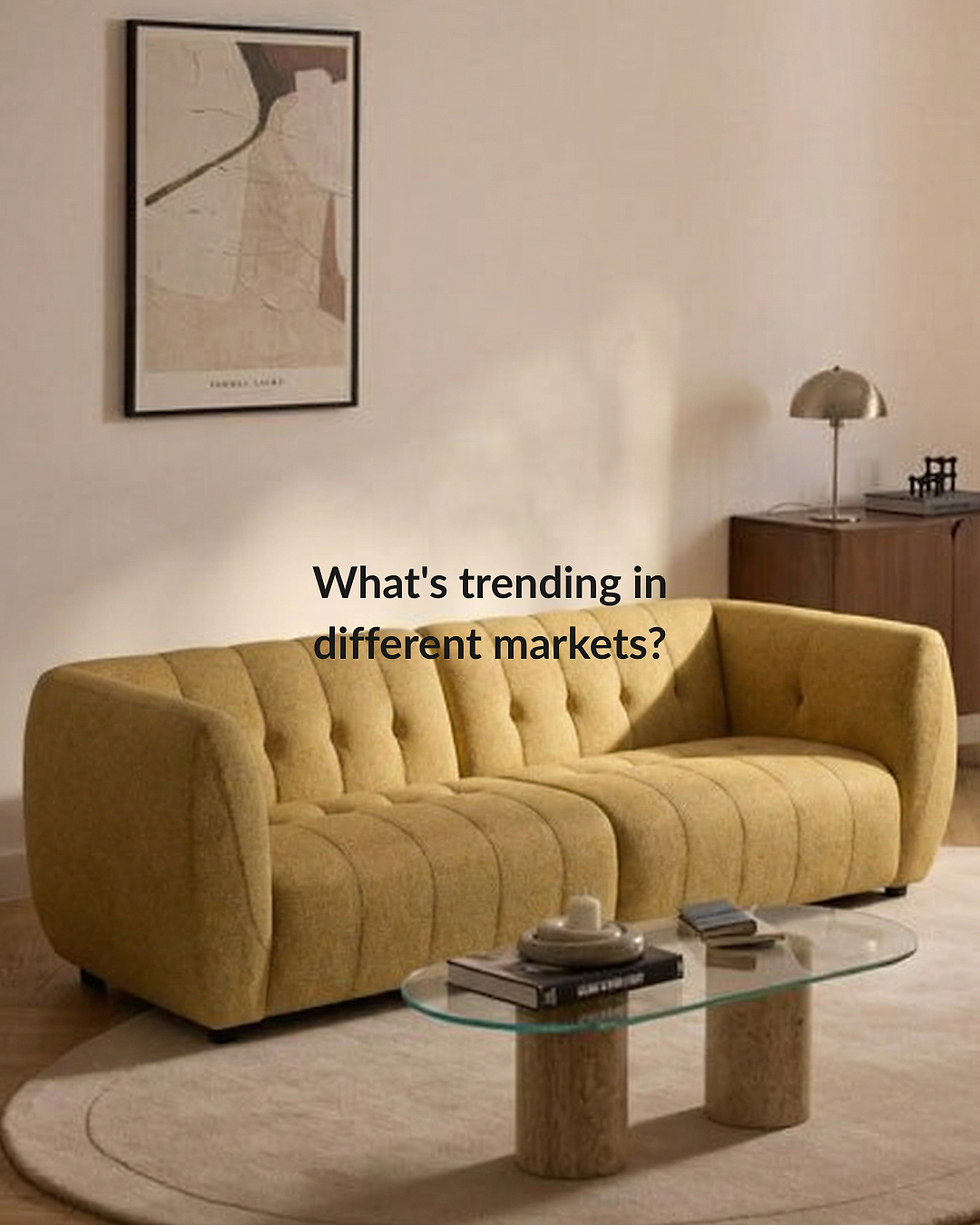
Europe: Refined Simplicity and Material Warmth
European furniture trends continue to favour restraint, material richness, and timeless proportions. Rather than oversized softness, many European collections balance comfort with cleaner lines and a more architectural presence.
Soft leather remains a strong material direction across many interiors, valued for its warmth, depth, and ability to age beautifully over time. Often paired with walnut wood, oak, or slim black metal legs, the overall look feels understated yet elevated.
Sofas in this market often feature slimmer arms and more tailored low profiles, creating a visual lightness while maintaining comfort. Texture also plays an important role, with woven fabrics and natural materials adding subtle details to the space without overwhelming it. The emphasis is often on material layering and craftsmanship rather than decorative excess.
Across many European-inspired collections, the aesthetic is less trend-driven and leans toward:
Relaxed luxury
Quiet sophistication
Timeless forms
Natural material palettes

United States: Comfort Comes First
In the United States, comfort continues to lead furniture design. Sofas are becoming deeper, softer, and more relaxed in appearance, reflecting a growing preference for spaces that feel casual, welcoming, and lived in.
Oversized seating with generous proportions has become increasingly popular, often featuring pillowy silhouettes, fuller cushions, and low-profile forms designed for lounging. Sofas are no longer viewed simply as statement pieces, but as spaces intended for extended comfort and everyday use. Rather than structured or formal seating, many collections now prioritise lounging comfort and visual softness.
Material choices also reflect this shift. Off-white bouclé fabrics continue to be highly sought after, bringing texture and warmth into contemporary interiors. Their soft tactile quality works particularly well with curved forms and relaxed silhouettes, creating spaces that feel calm and inviting.
Neutral palettes remain dominant, with creams, warm whites, taupe, and earthy tones frequently used to maintain an understated and versatile look.
Overall, the US market continues to move toward furniture that feels:
Comfortable
Relaxed
Generous in scale
Soft in appearance

Asia-Pacific: Calm, Functional Spaces
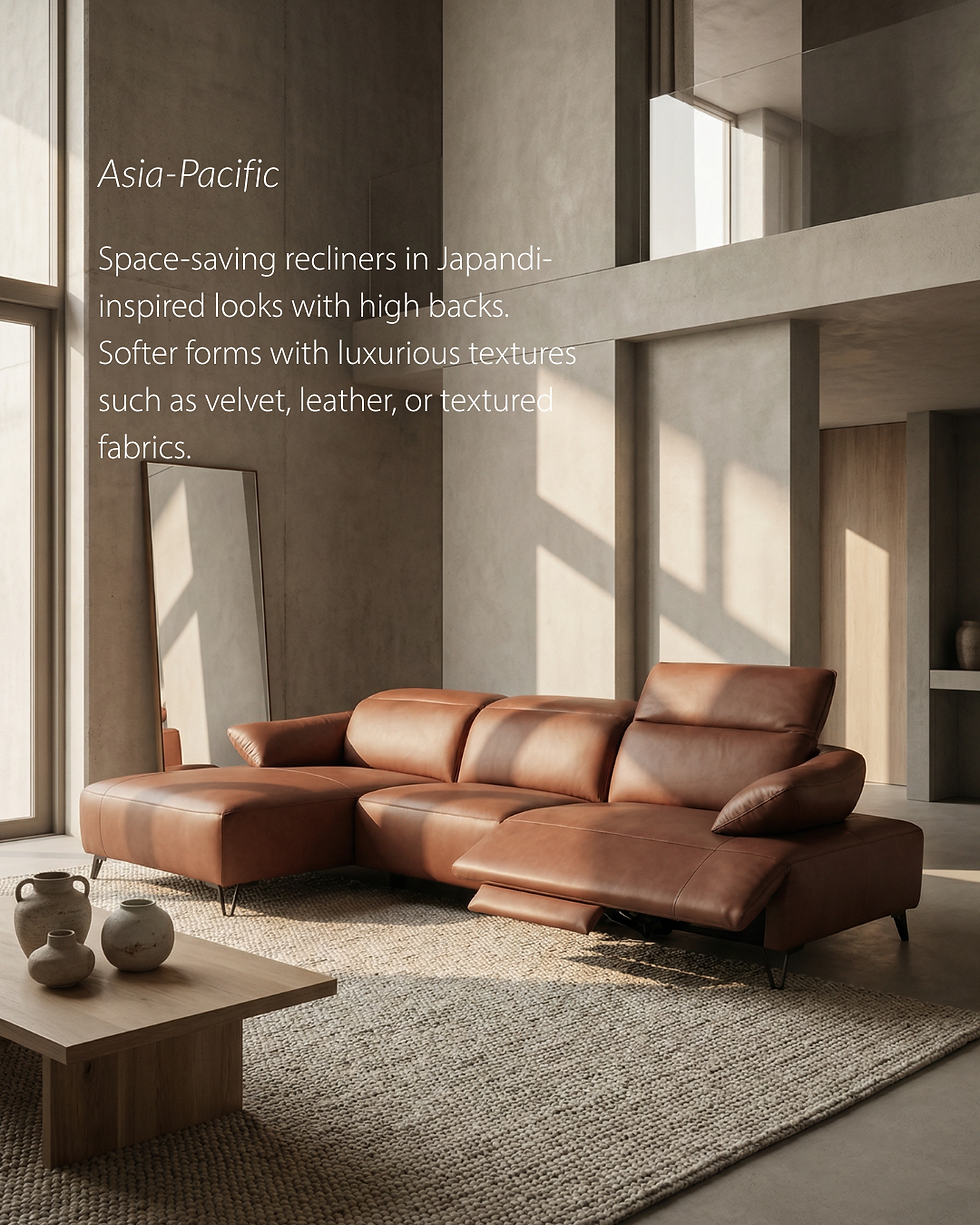
Across the Asia-Pacific market, furniture design continues to be shaped by practicality, flexibility, and the growing influence of urban living. As homes become more compact, furniture is expected to balance comfort with spatial efficiency.
Japandi-inspired aesthetics remain particularly influential throughout the region, combining Japanese minimalism with Scandinavian warmth. Clean lines, warm wood finishes, muted tones, and visually lighter forms continue to define many contemporary interiors. Rather than heavily decorative furniture, there is a growing preference for pieces that create calm and simplicity within the home.
Space-saving recliners and modular seating are also becoming increasingly relevant, especially in urban apartments where adaptability matters. Sofas and chairs are often designed with slimmer proportions and multifunctional layouts that make better use of available space without compromising comfort.
The overall atmosphere within many Asia-Pacific interiors feels softer and more restrained, with direction that prioritises:
Calmness
Functionality
Simplicity
Flexible living
Designing for Different Markets
As furniture trends continue to evolve globally, regional differences are becoming increasingly important. Comfort expectations, material choices, colour palettes, and spatial requirements vary from one market to another, and they influence how furniture collections are developed and positioned for different markets.
For manufacturers and brands, adaptability has become essential. A sofa designed for the European market may prioritise tailored silhouettes and material richness, while the US collections may require deeper seating and softer proportions. In Asia-Pacific markets, space efficiency and visual lightness may take precedence.
Understanding these differences allows furniture collections to feel more relevant, intentional, and aligned with the lifestyles they are designed for.
At HUGO, collections are developed with international markets in mind, balancing global design awareness with the flexibility to adapt across different regions, styles, and customer preferences.


